


Certified CE and FDA K 190894 Class II
ESSEBI MEDICAL SRL TOTIM®
Strada Campo del Fiume 84
47896 Faetano, RSM
C.O.E. SM26889
TOTIM® Patient Cushions Positioning System Ophthalmology
Patient Cushion Positioning is used for positioning adult and pediatric patients undergoing eye surgery in order to ensure more comfort to the patient and the surgeon
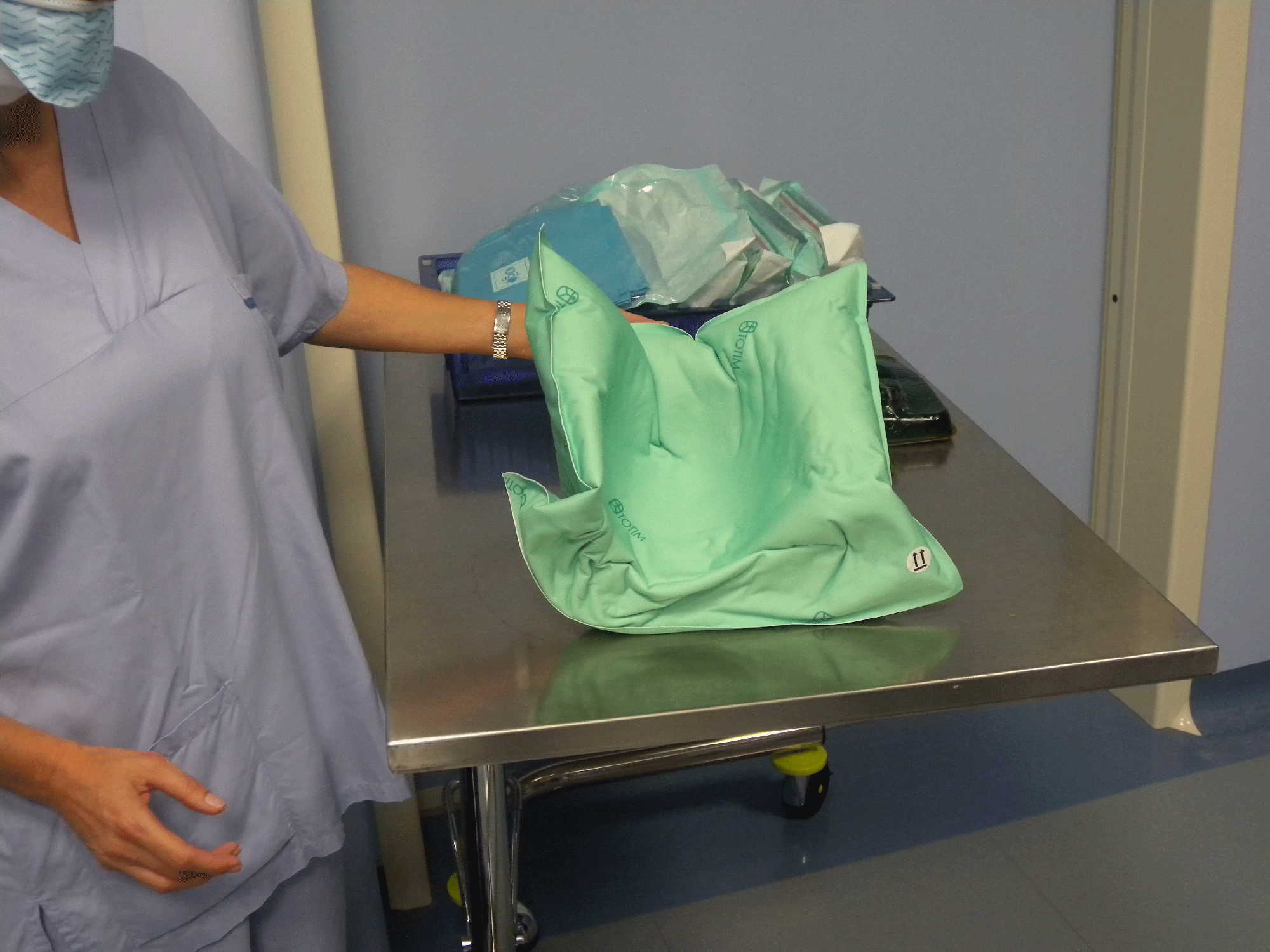
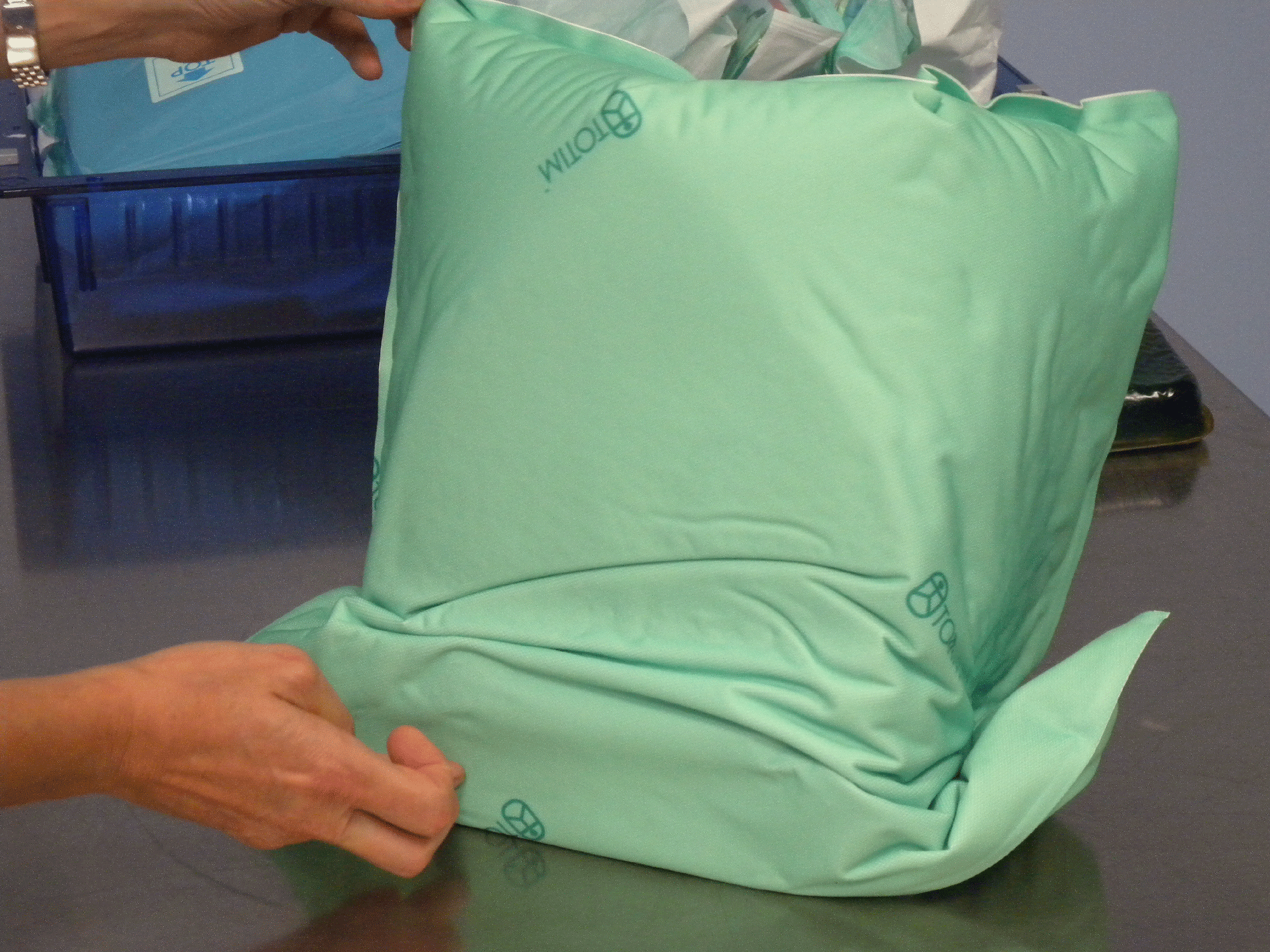
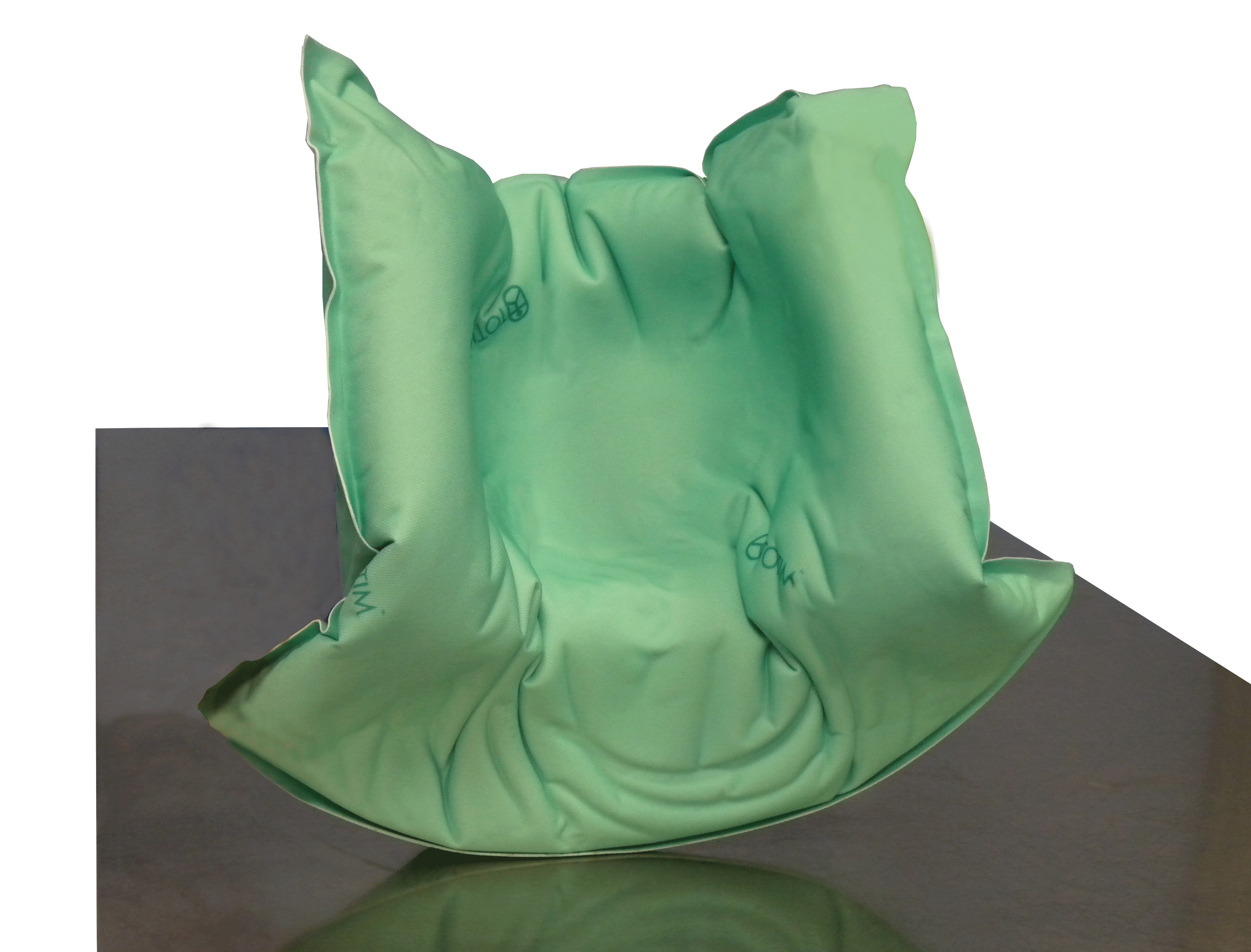
Fully sealed, its outer material is microfiber polyester cushion that contains two reagents inside which must be mixed to obtain a polyurethane foam. After a short time the polyurethane foam solidifies taking the shape of the patient's head
The cushion allows the patient to find a more comfortable position during surgery
Single Patient and use
2026 TOTIM® - ESSEBI MEDICAL, All Rights Reserved©
Main Medical conditions responsible for a difficult position
Other application
The cushion could be useful during the post-operative course, when it is necessary for the success of the surgery that the patient maintains a certain position for a long time (vitreoretinal and corneal surgery)
The patient will be more comfortable
TOTIM Patient Cushion Positioning System is used for positioning adult and pediatric patients undergoing eye surgery in order to ensure more comfort to the patient and the surgeon
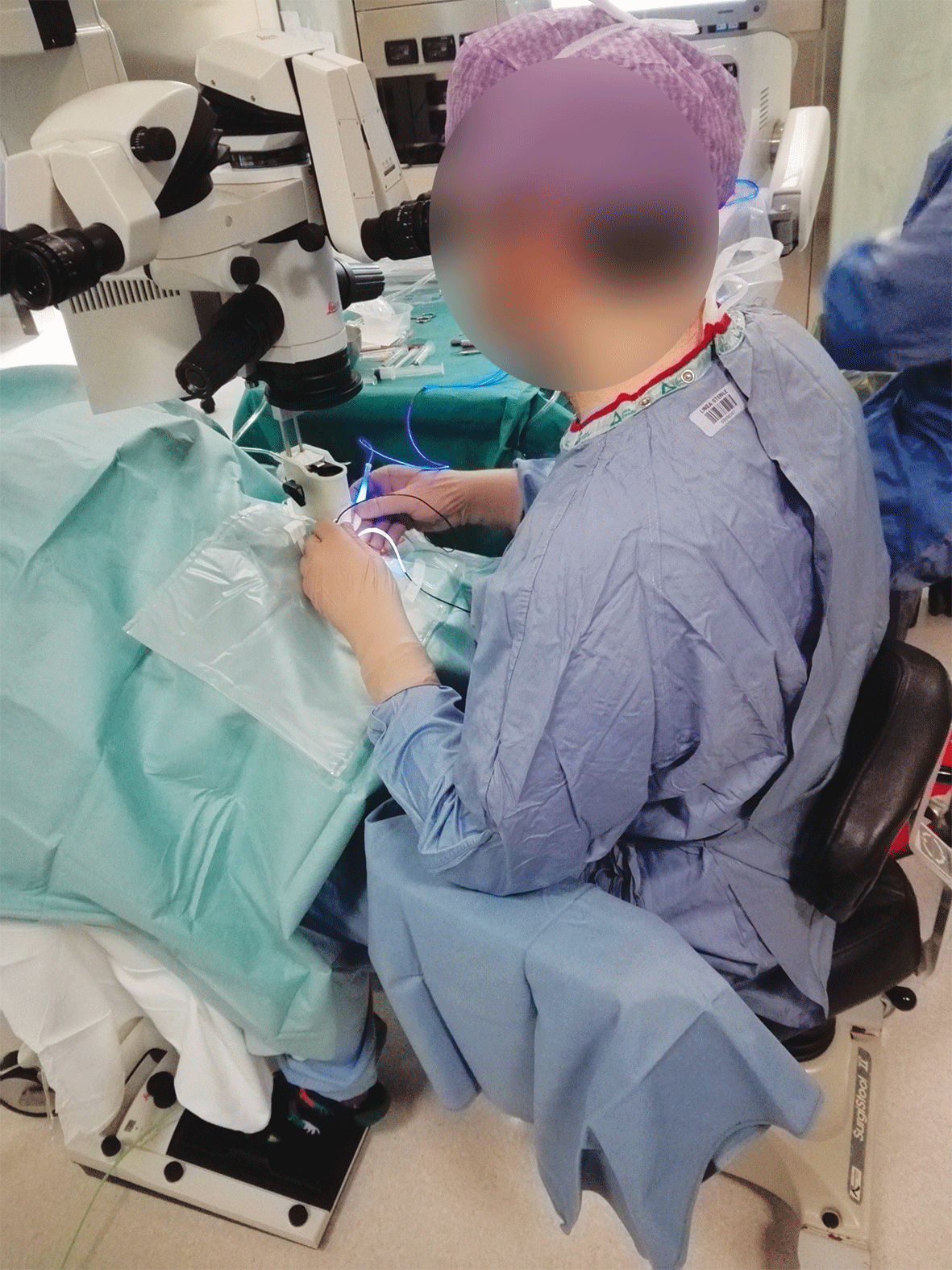
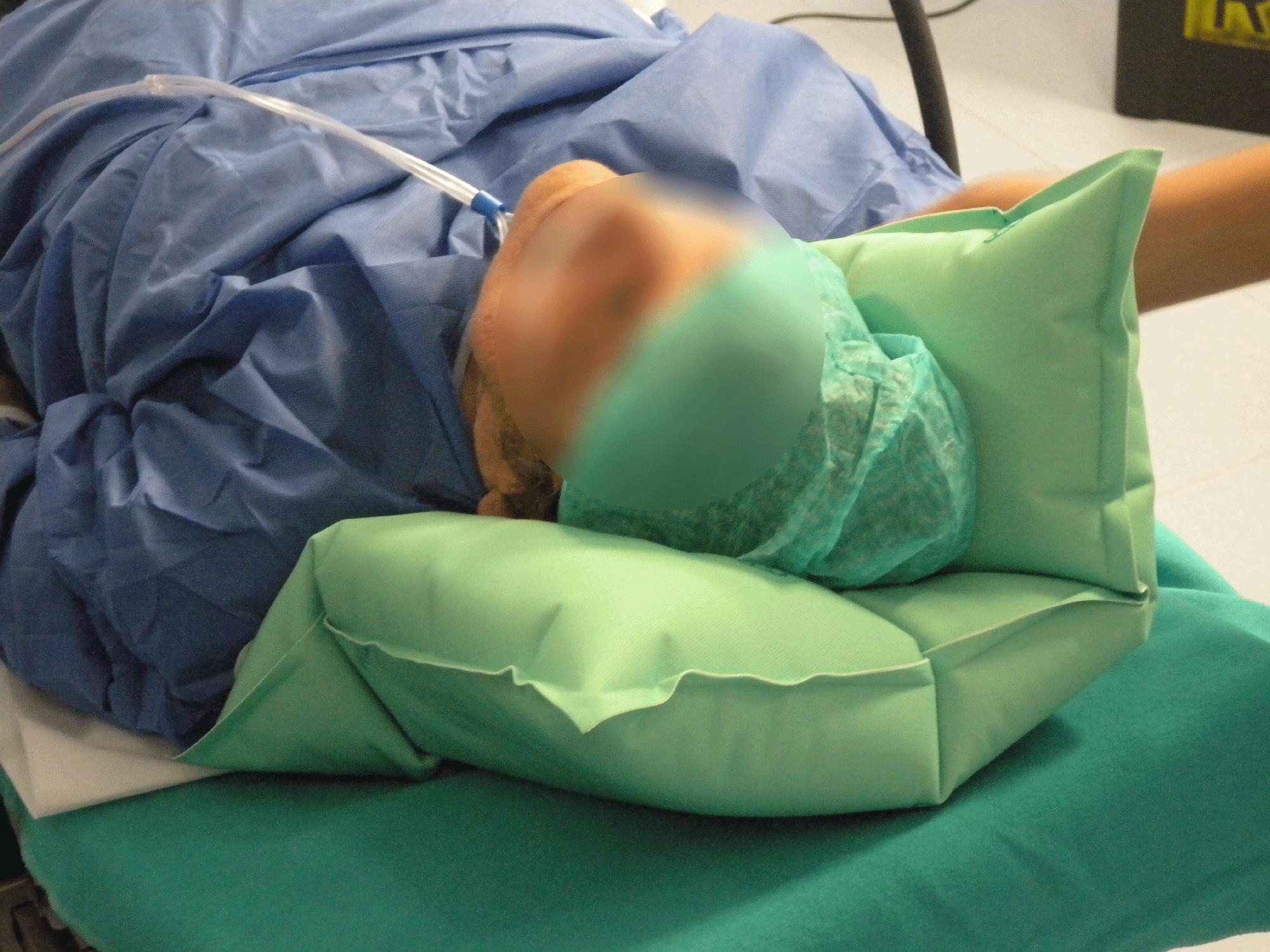
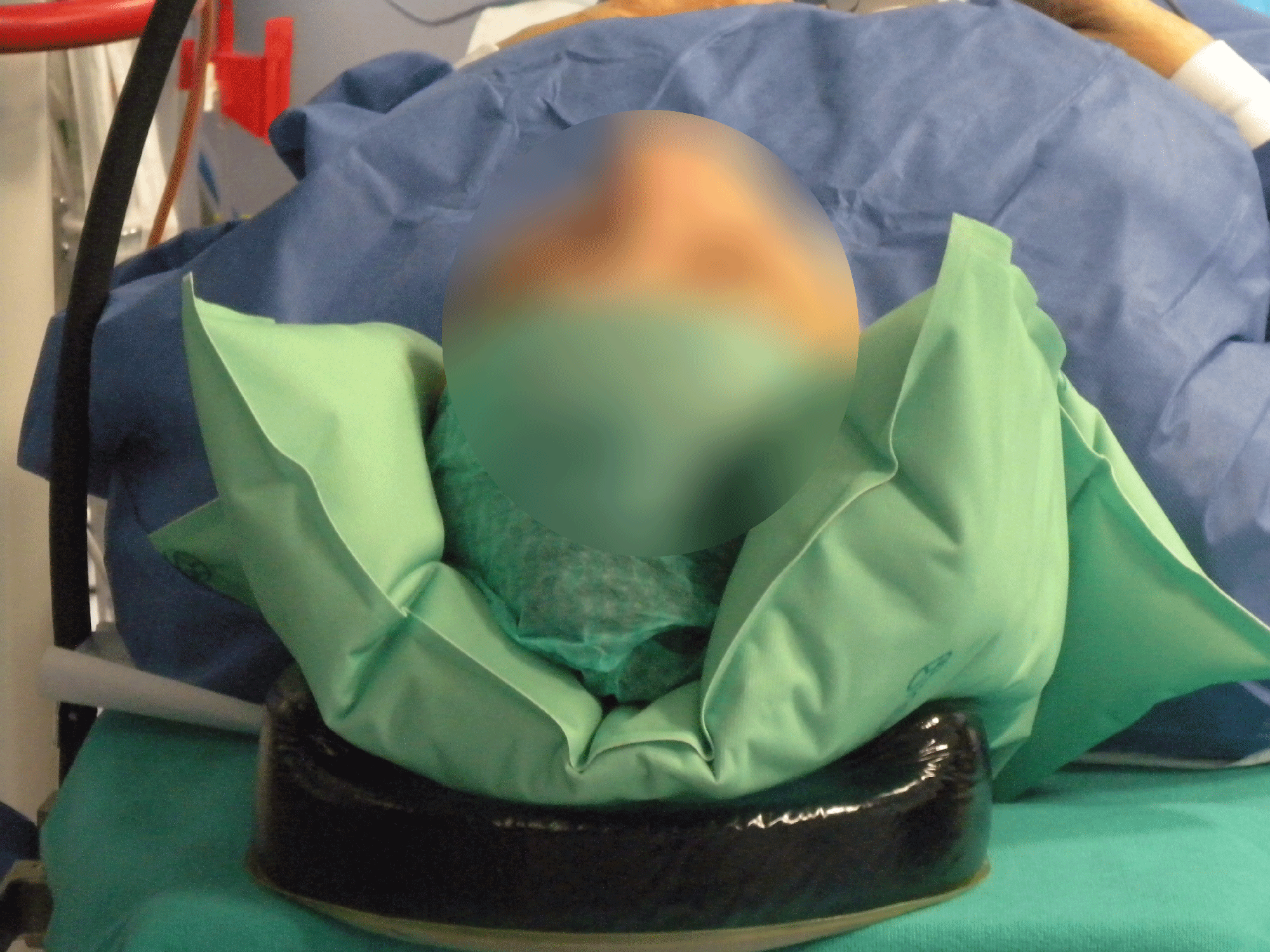
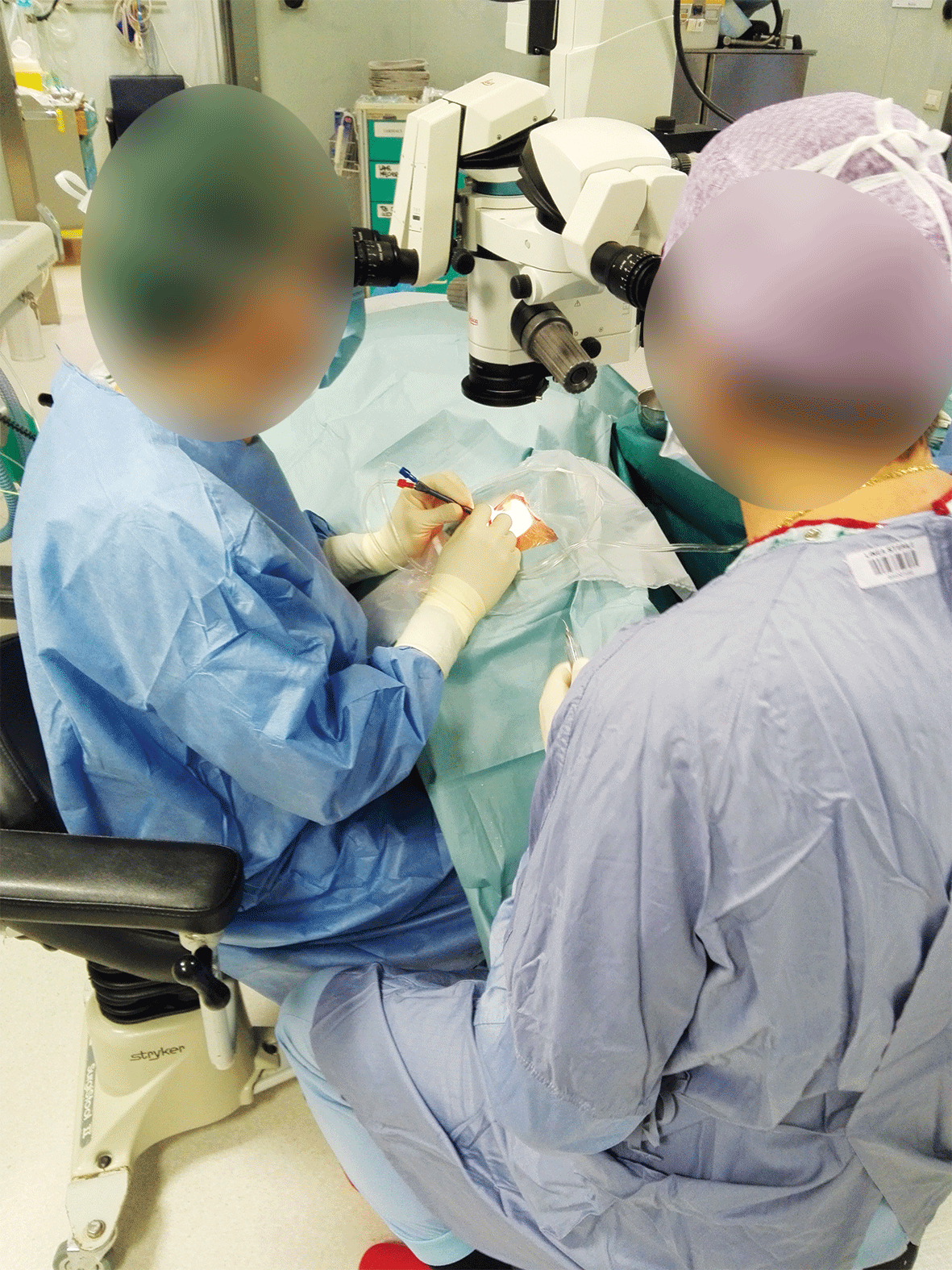
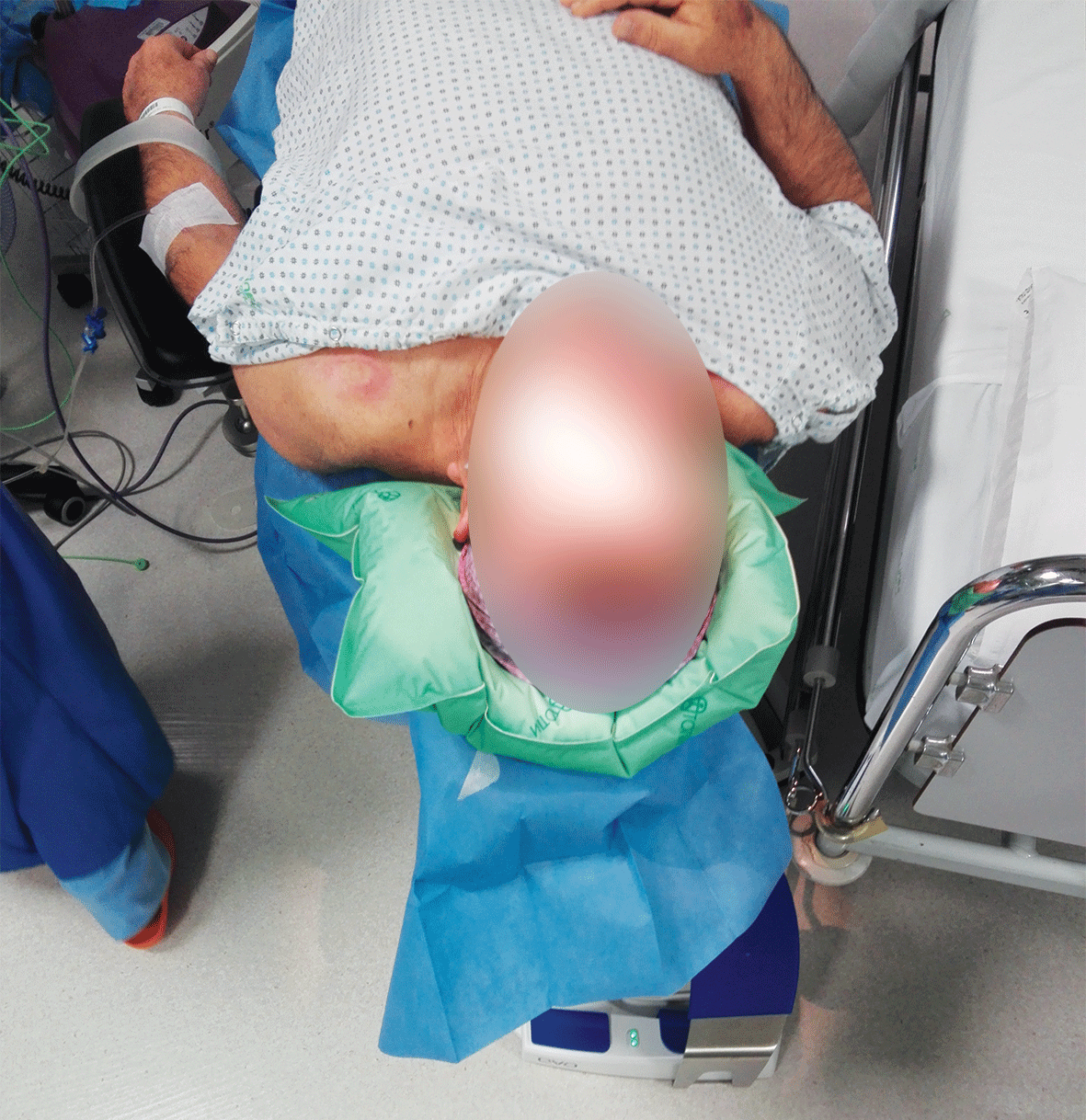
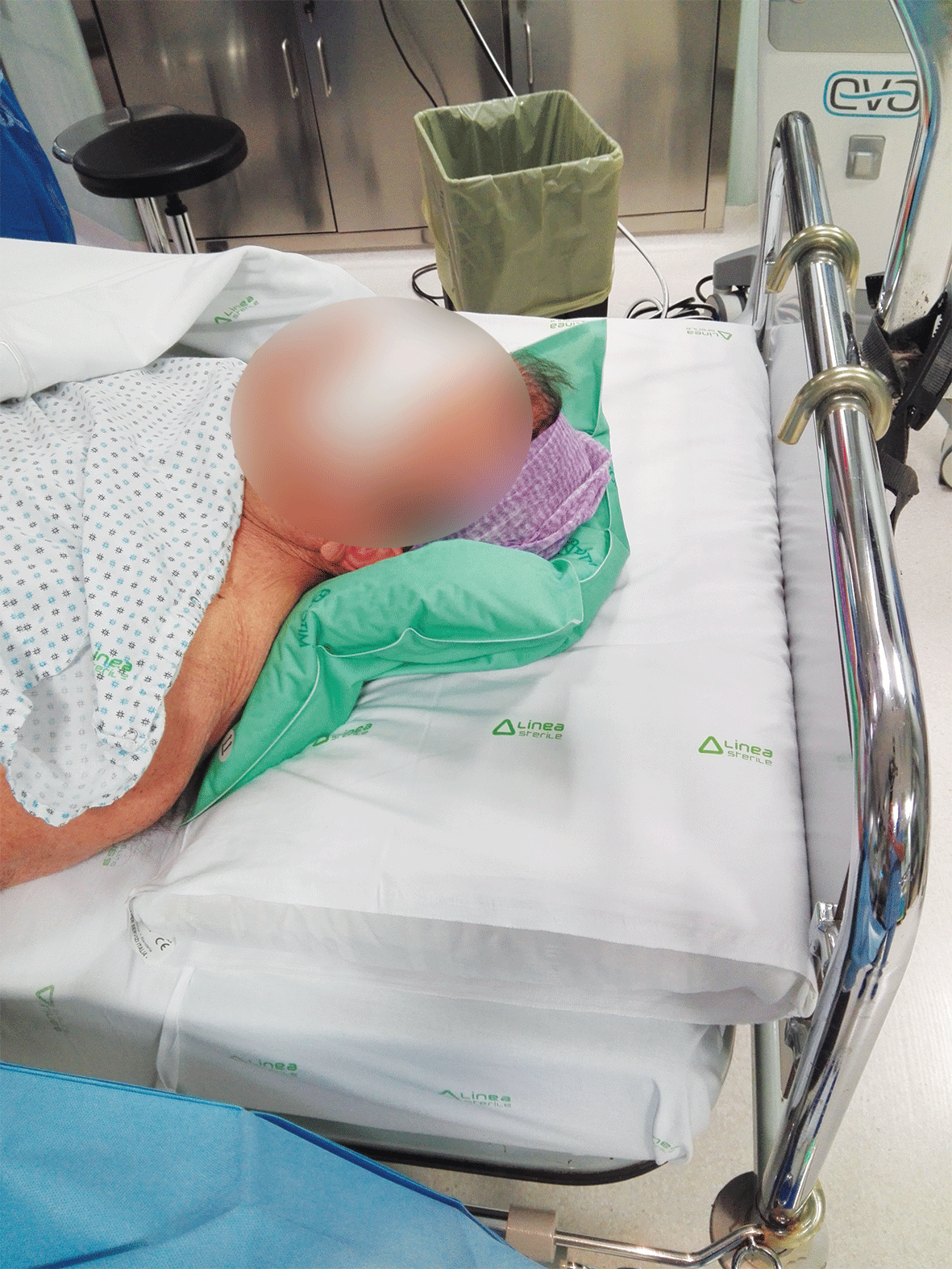
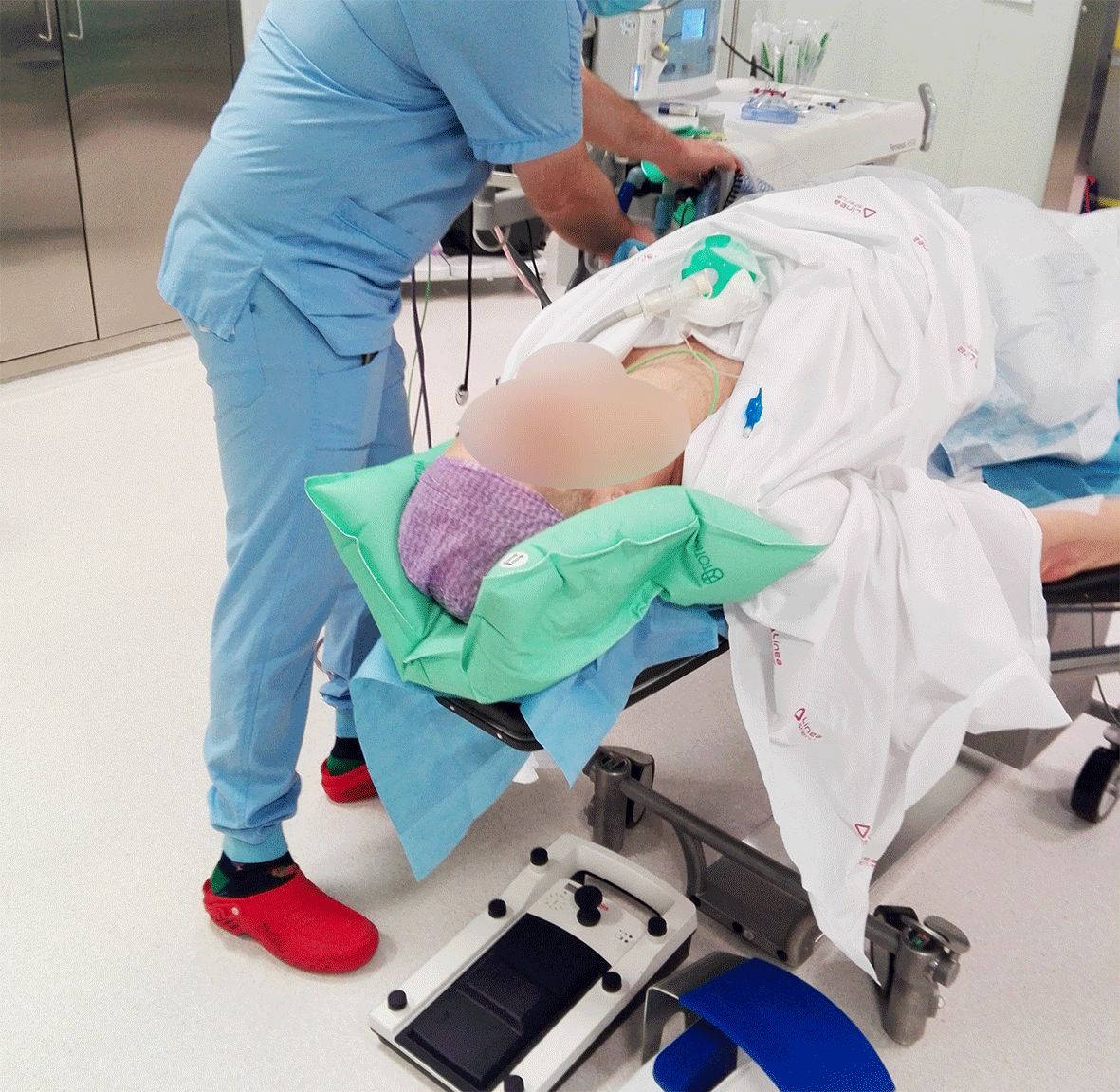
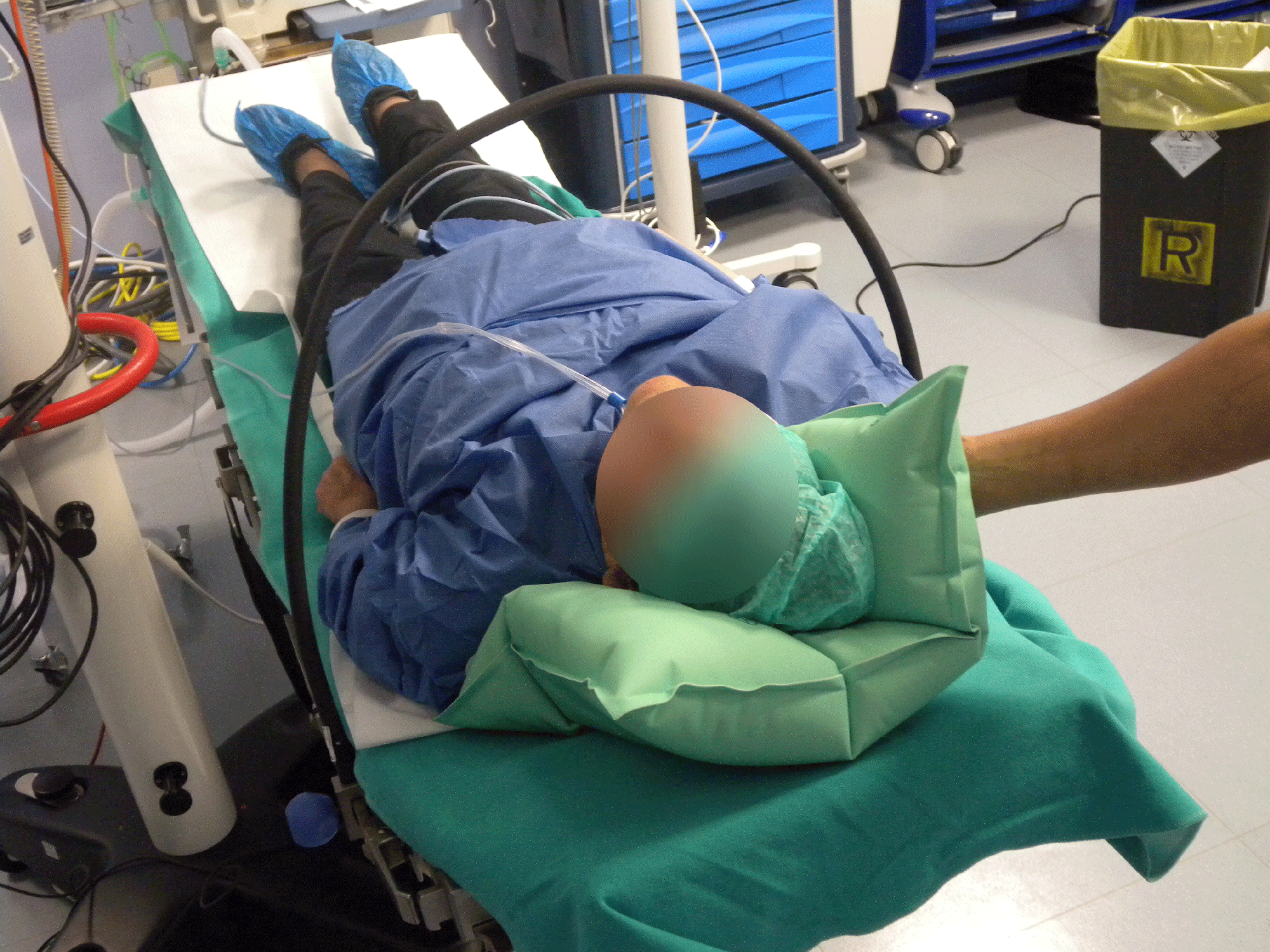
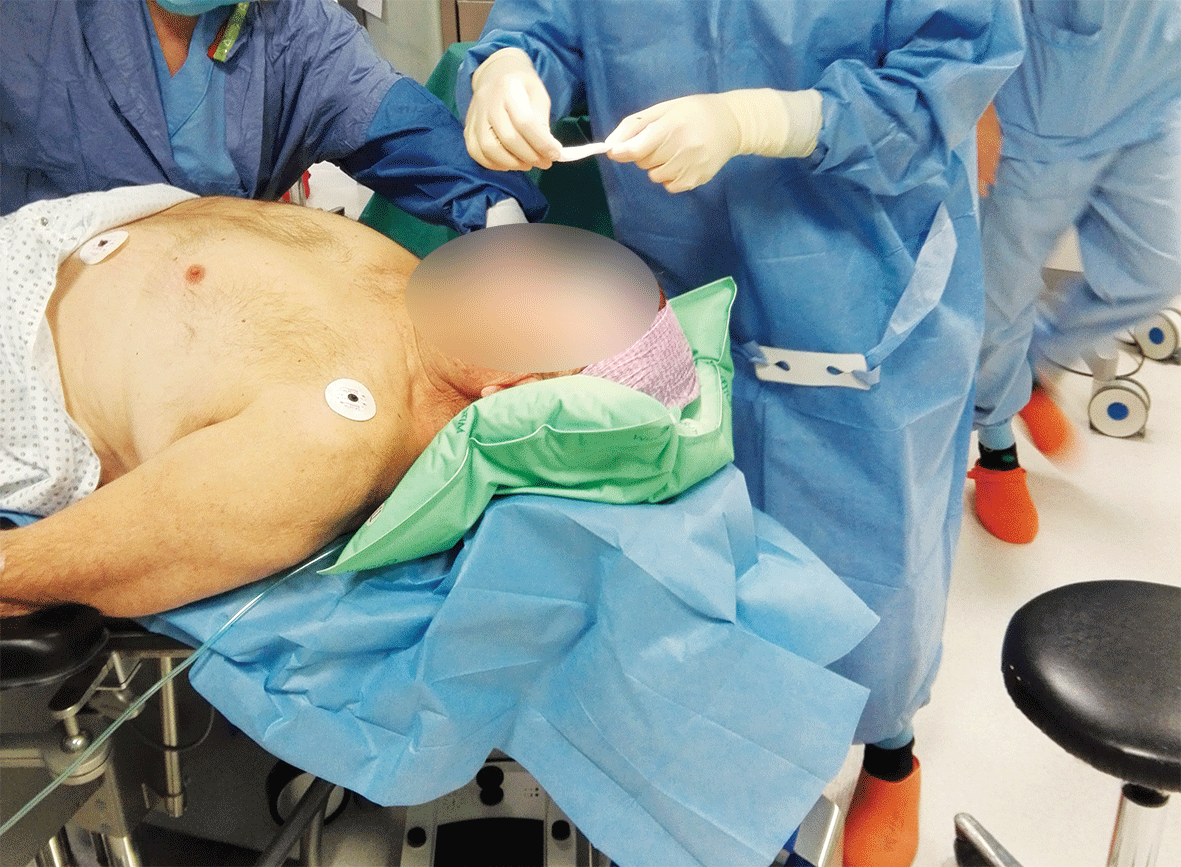
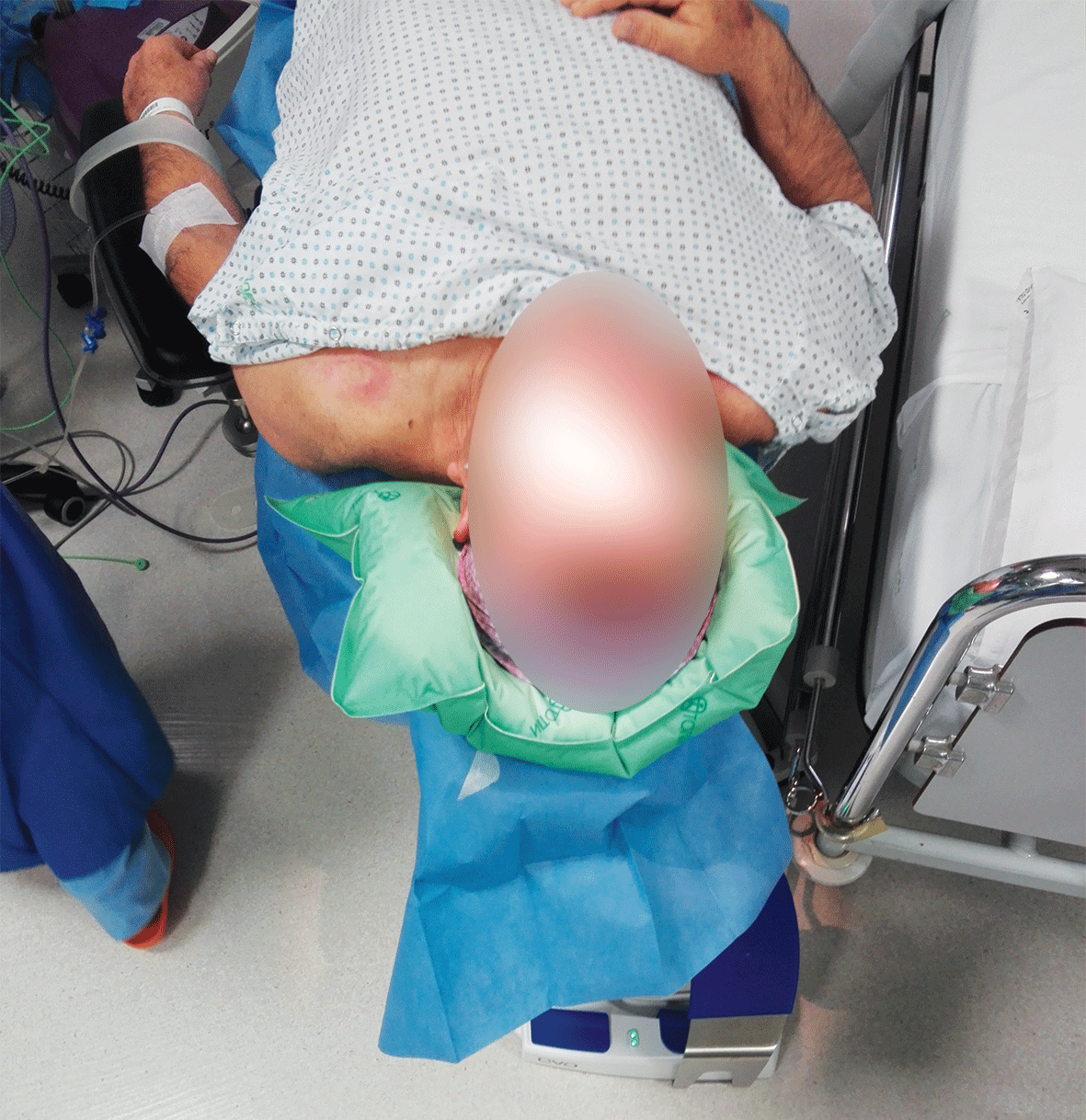
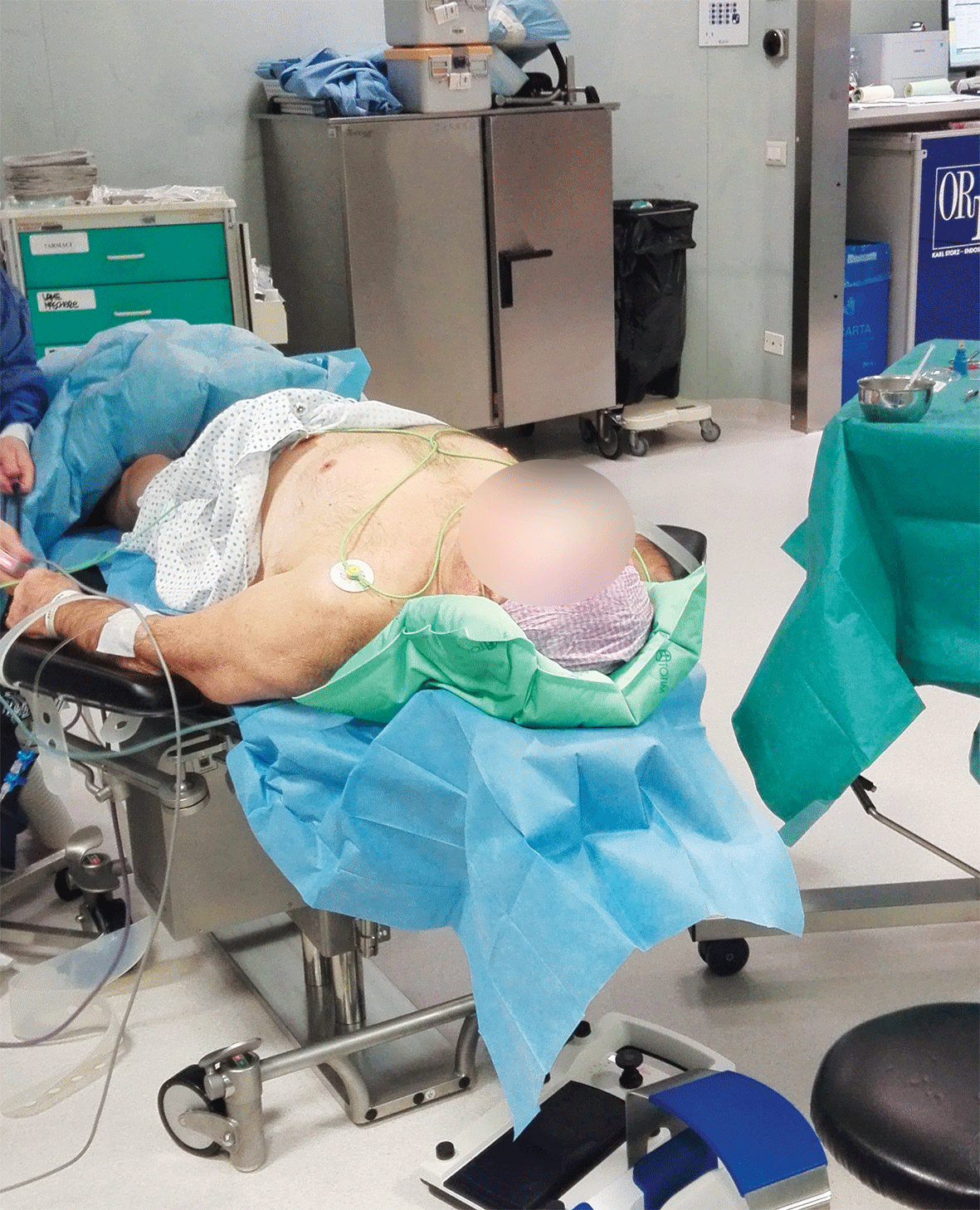
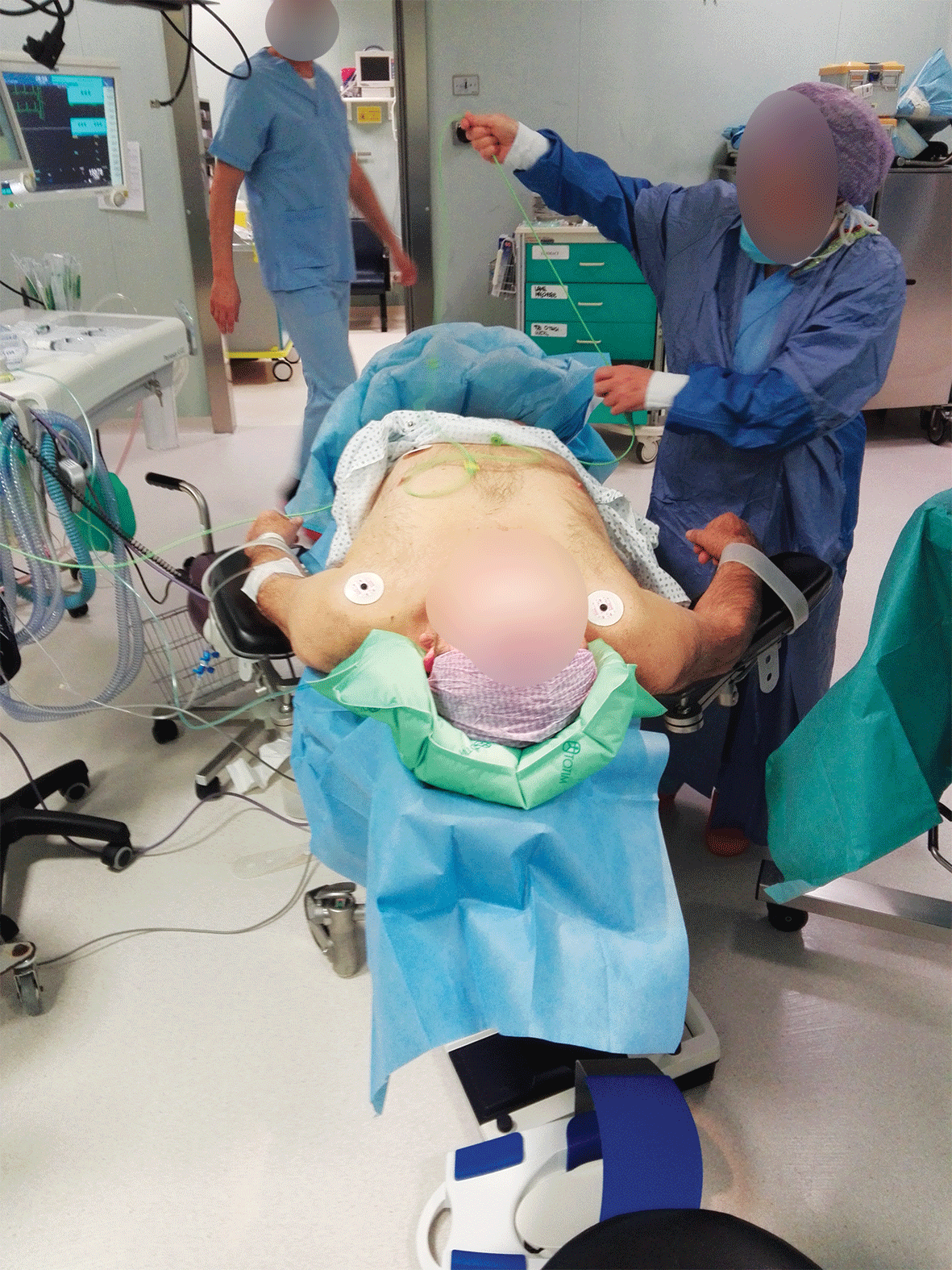
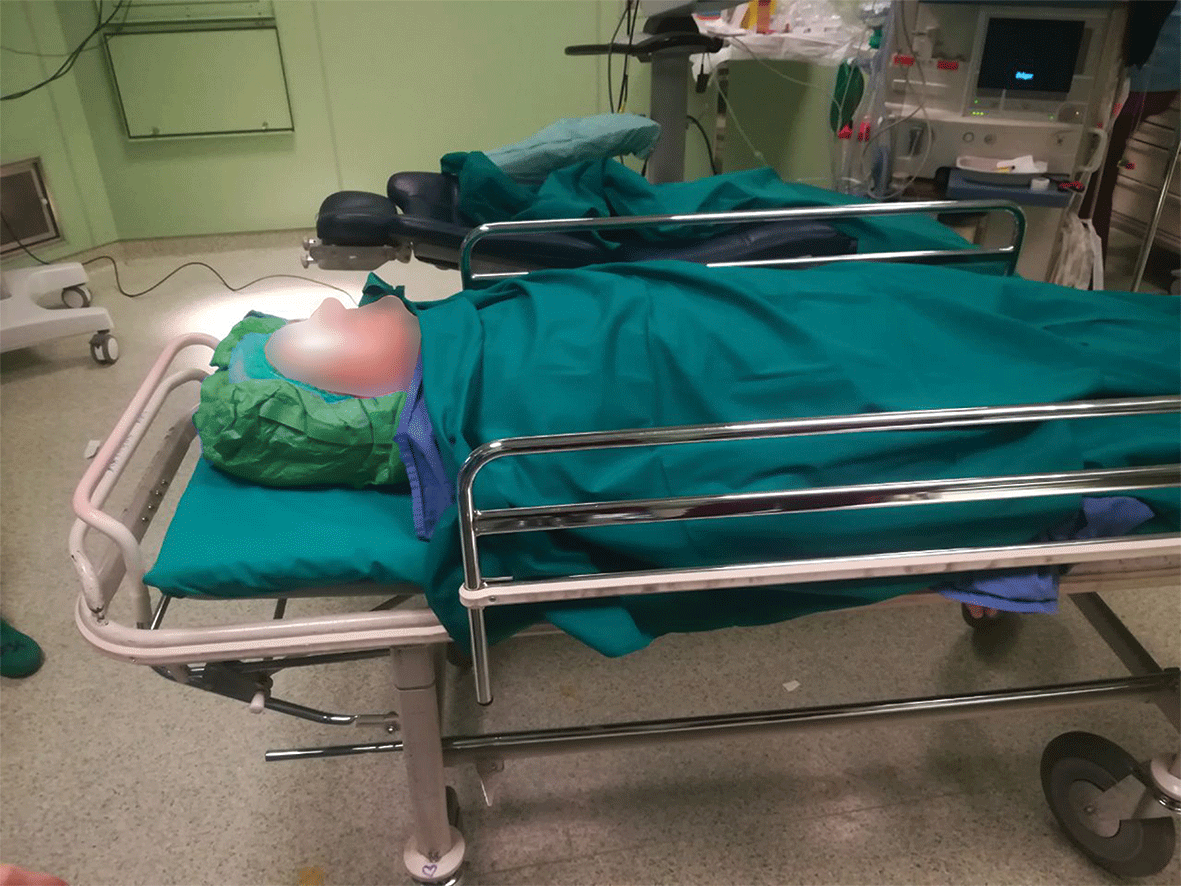
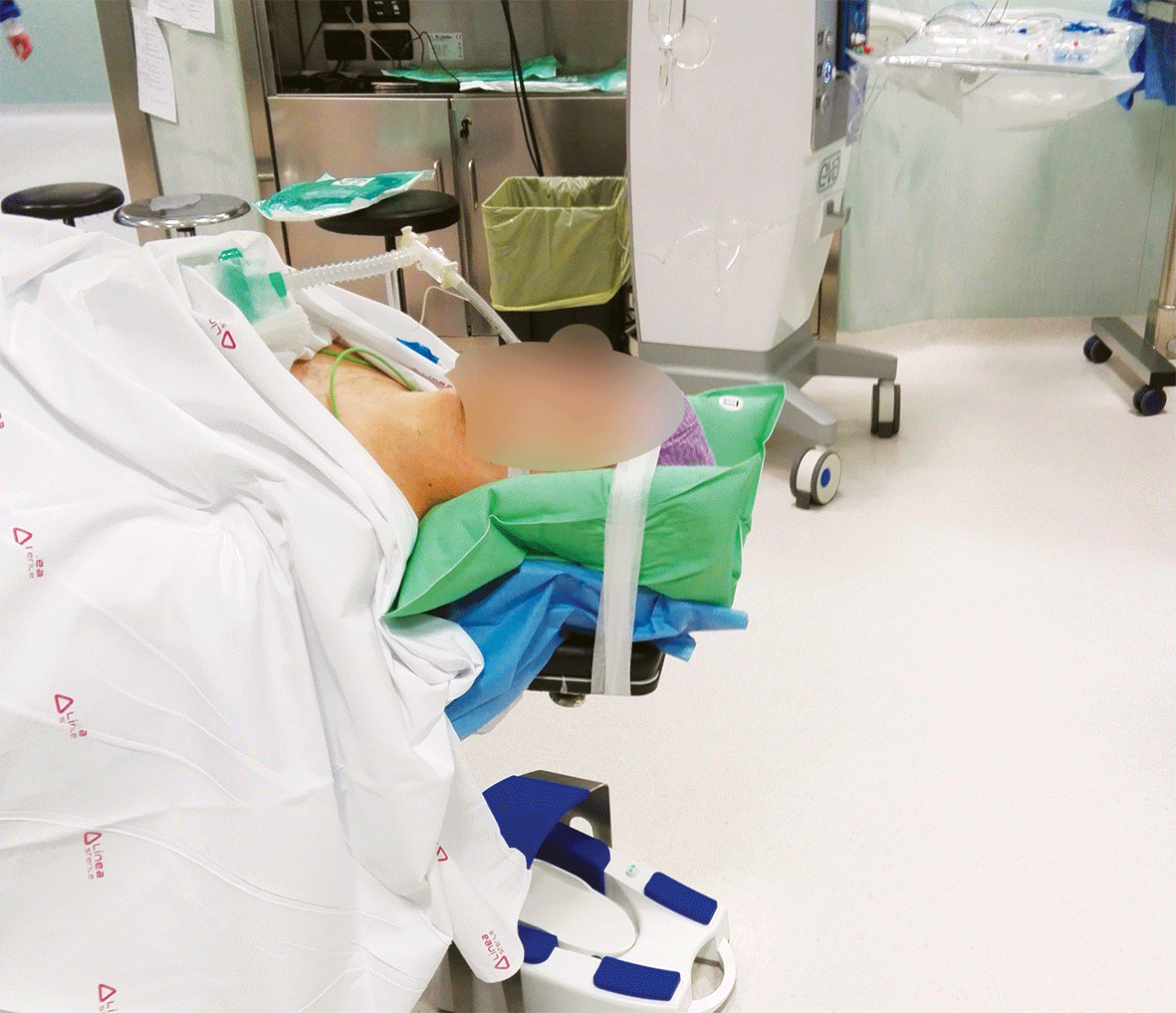
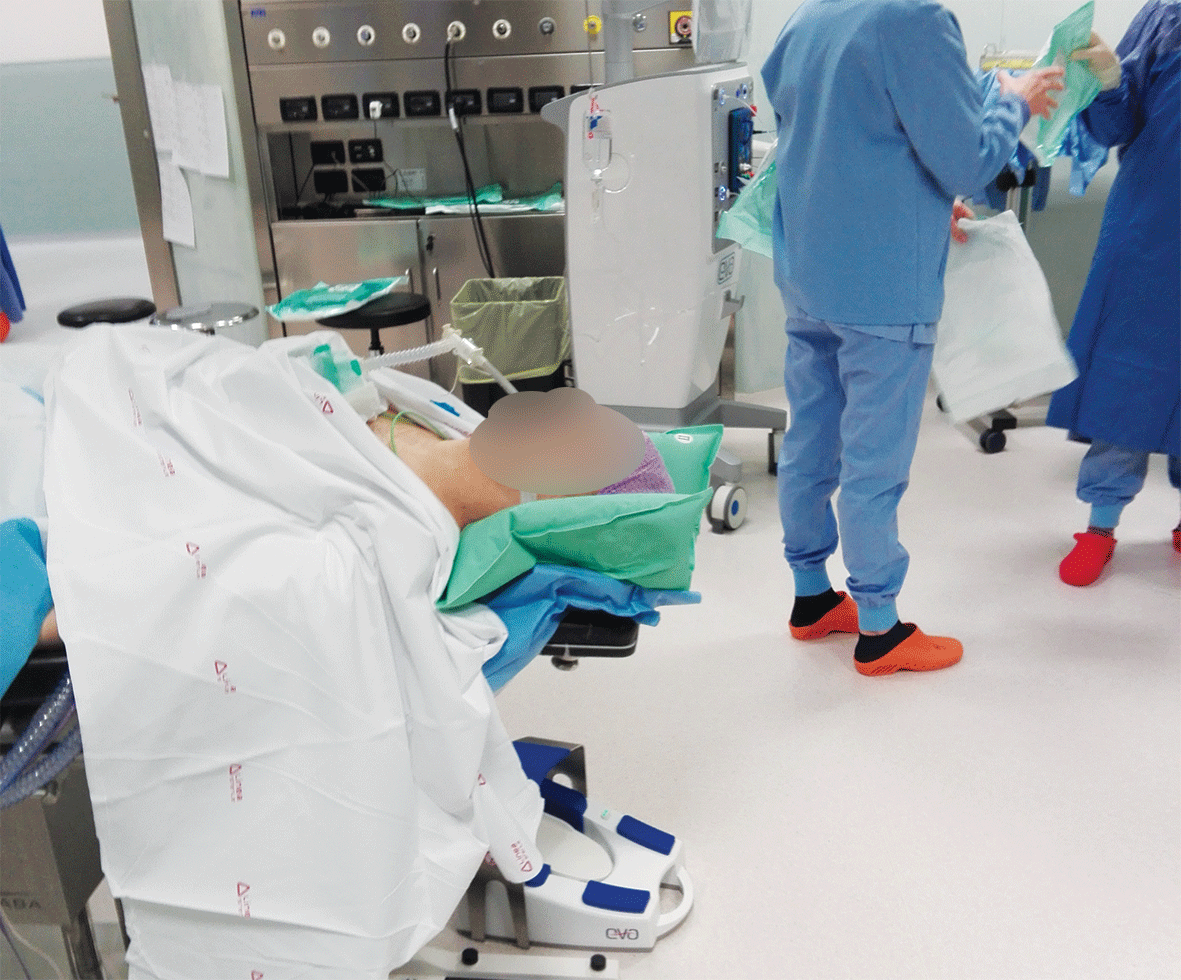
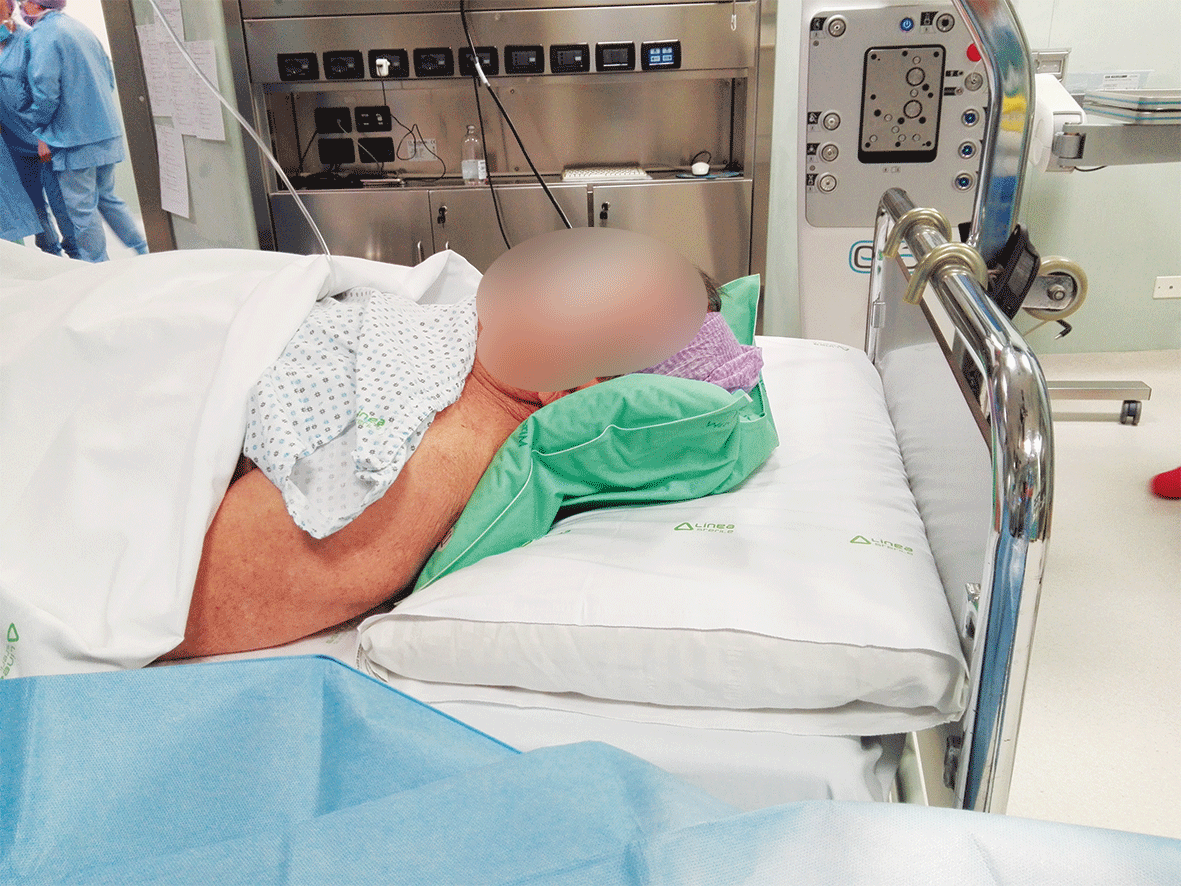
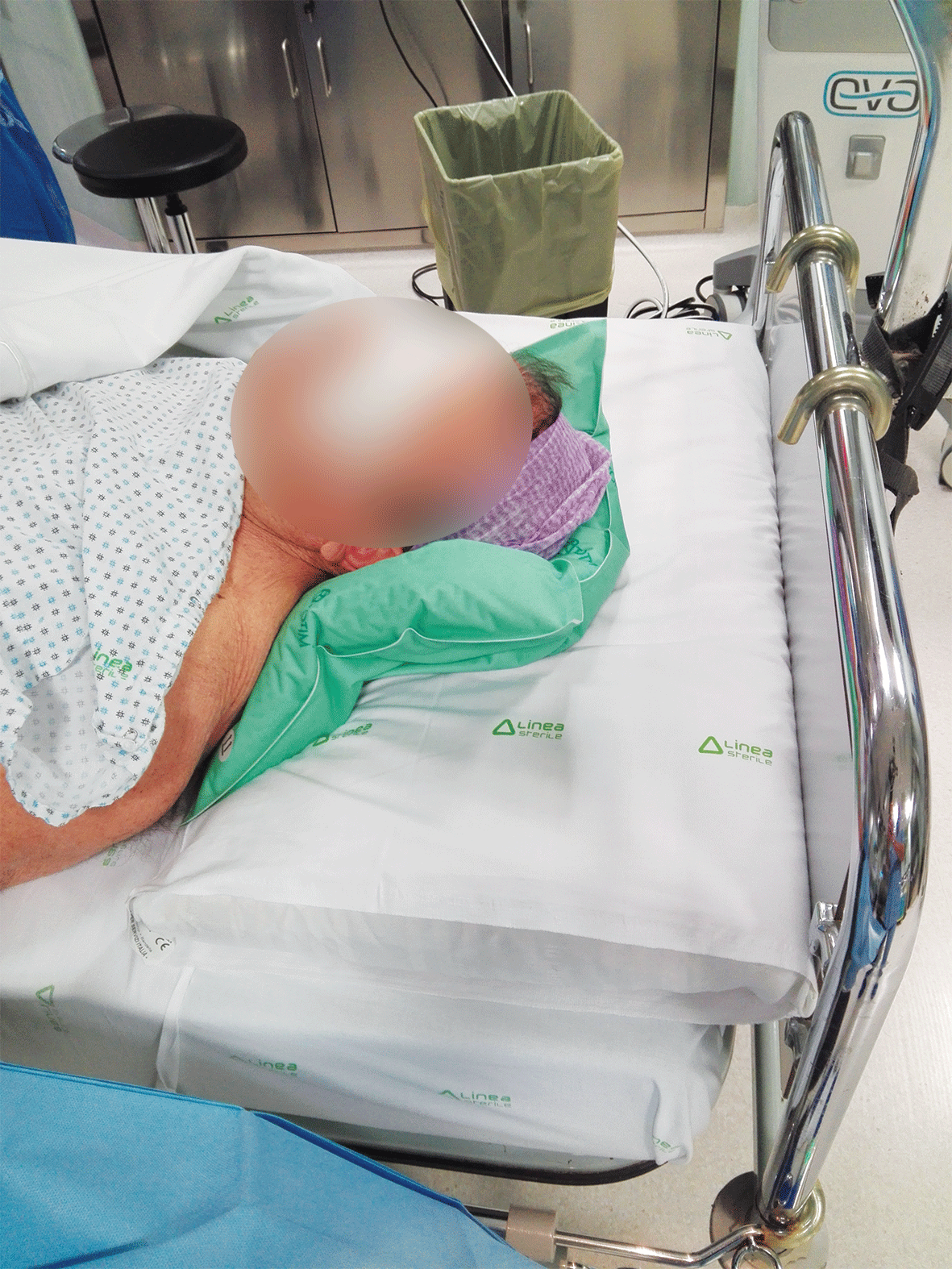
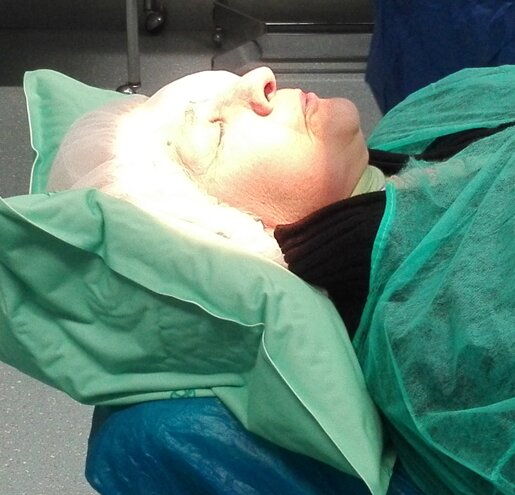
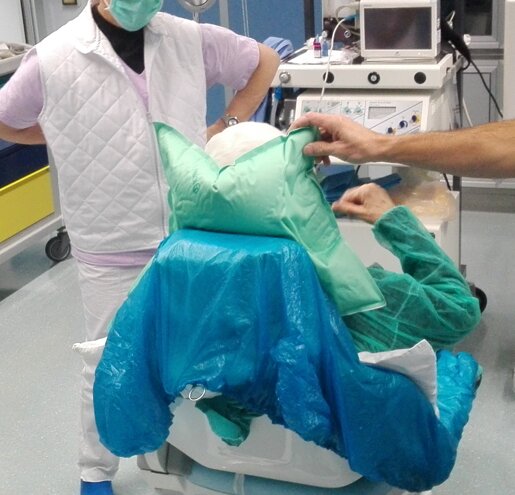
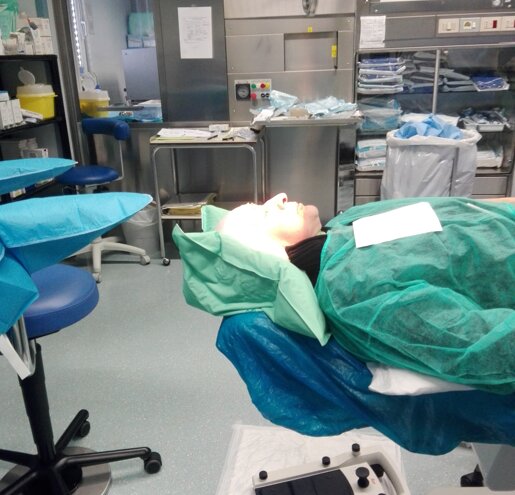
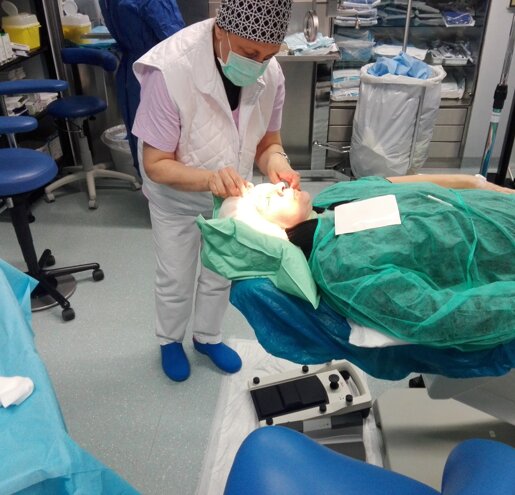
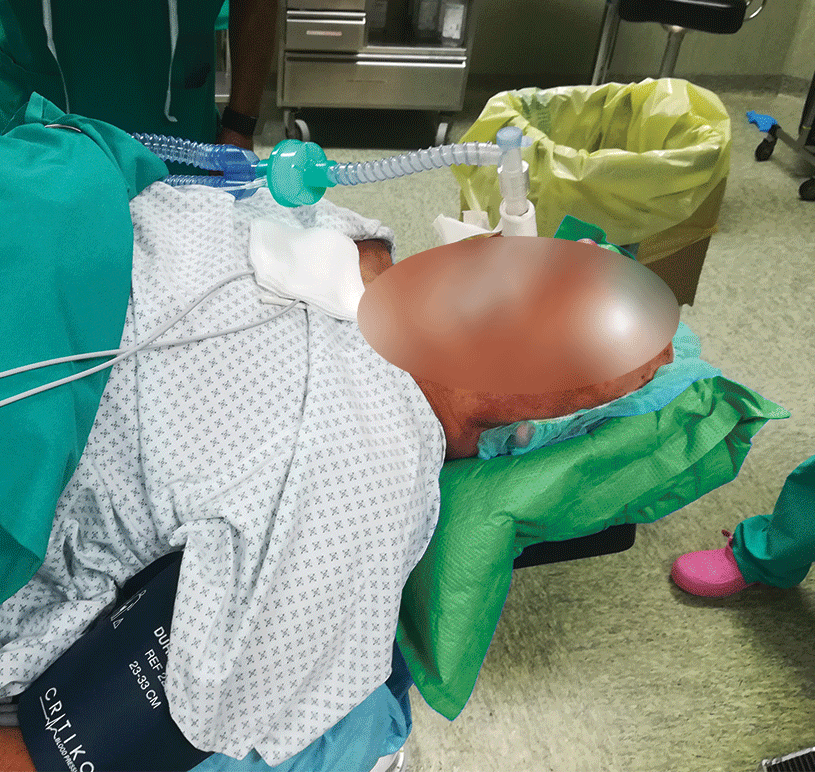
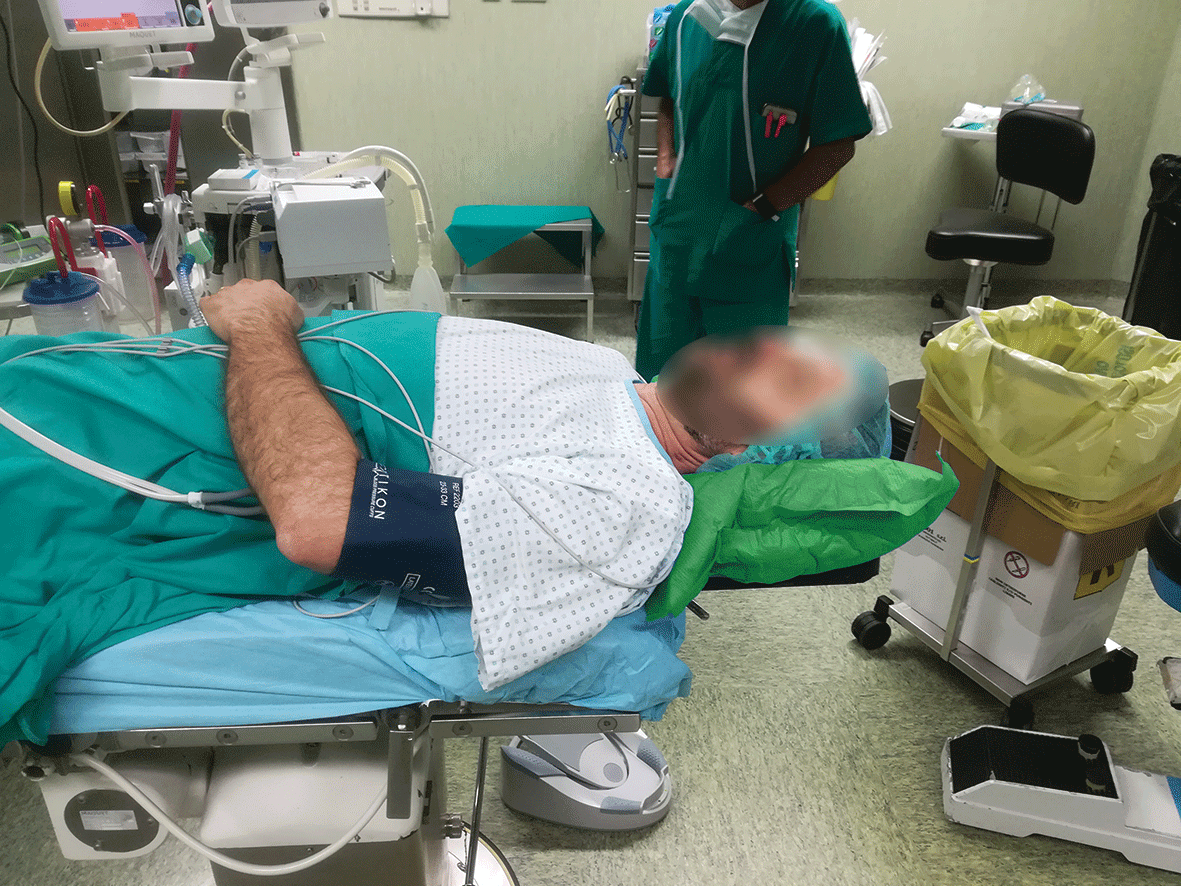
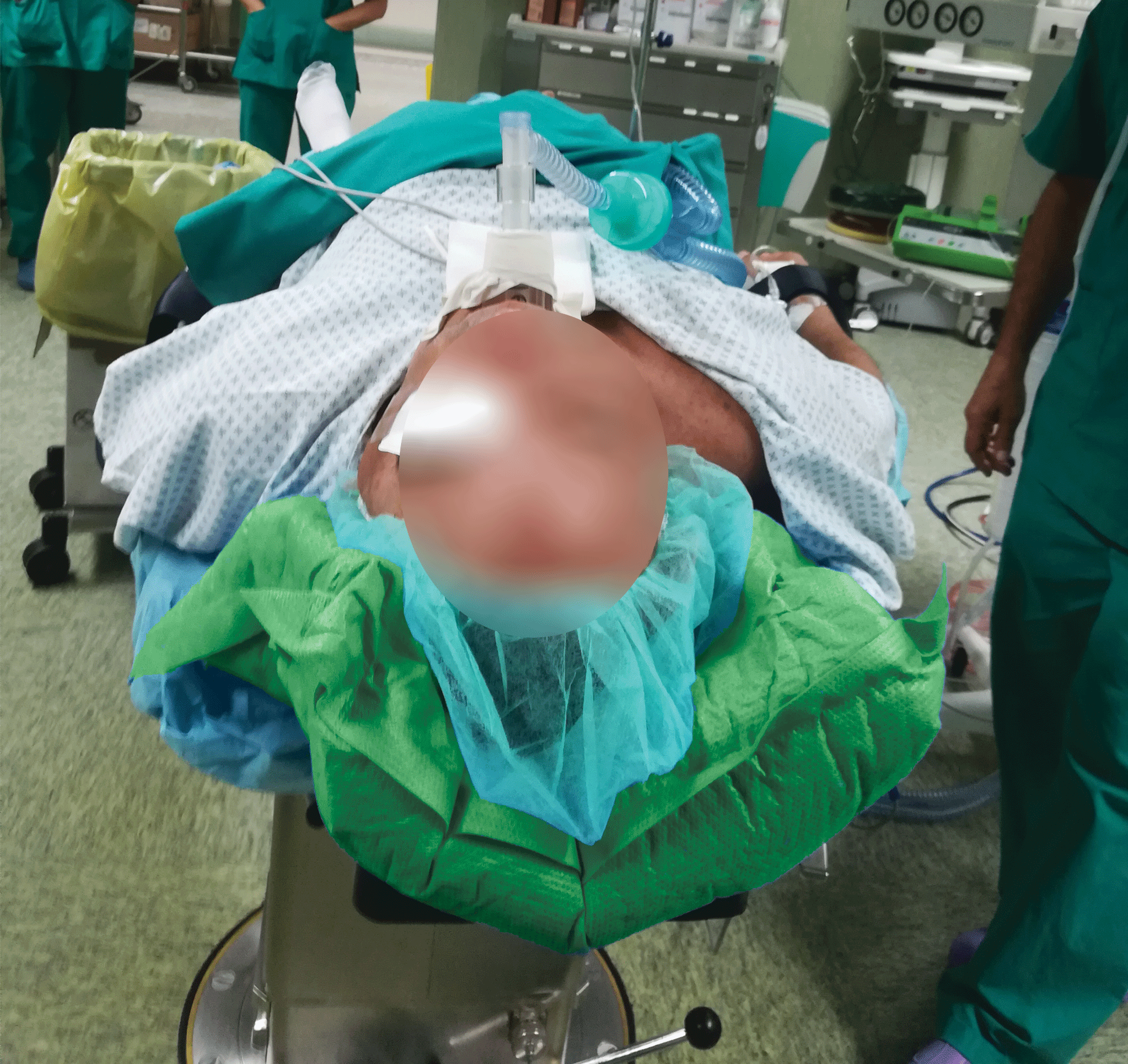
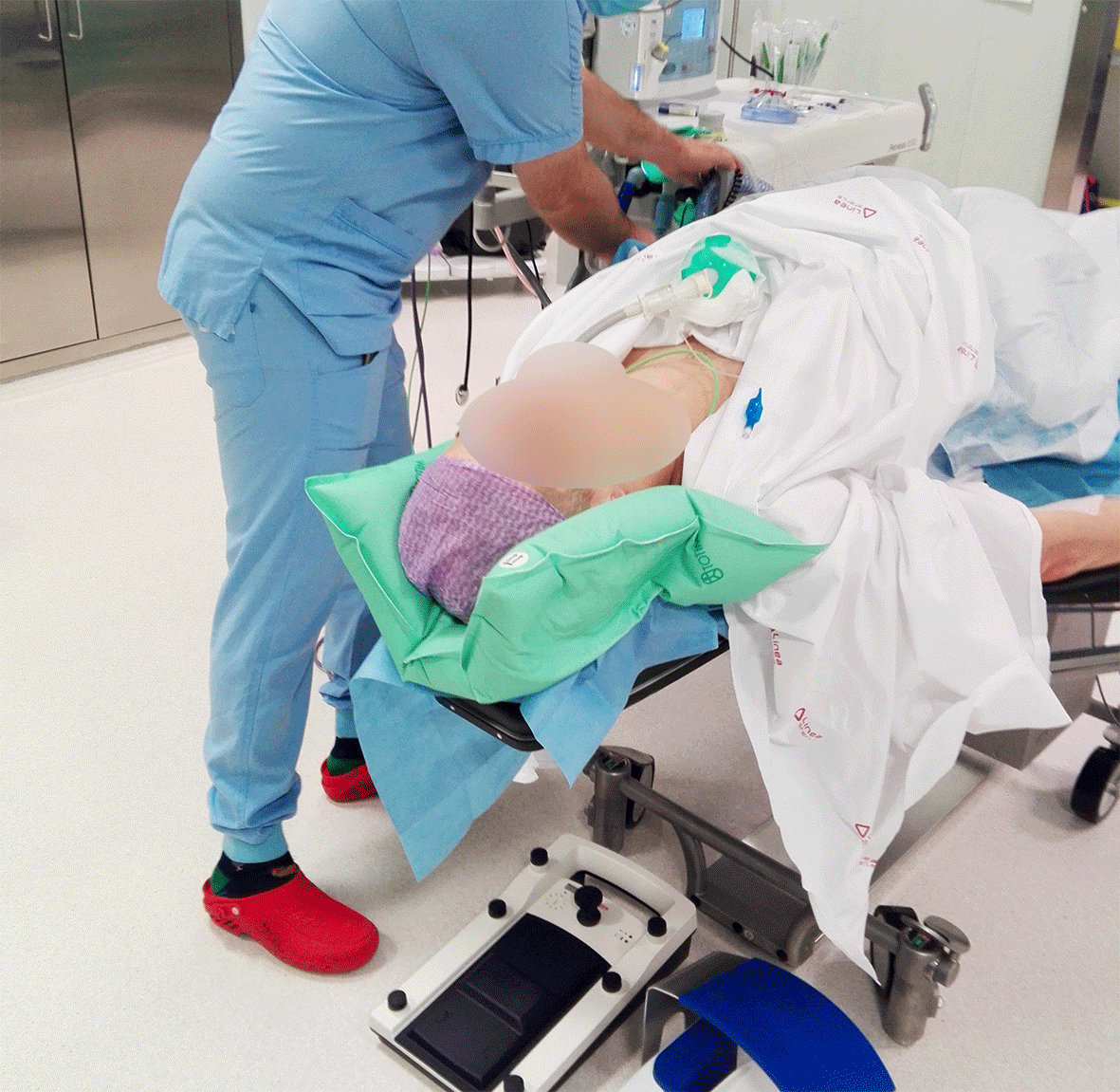
PATIENT HAS AN ALTERATION OF THE SPINE OR NECK: TRENDELENBURG POSITION
It only works for patients who can tolerate this position, therefore it is not suitable for many geriatric patients who may have coexistent orthopnoea
Because the head is lower than the rest of the body, venous engorgement can be expected
This may cause vitreous bulge: for cataract surgery, this can be compensated for by raising the height of the infusion bottle
PROBLEMS CONCERNING THE PATIENT
Patient with spine alterations or neck rigidity (kyphosis, lordosis, gibbosity)
Patients who cannot maintain the supine position for a long (obstructive pulmonary disease, heart failure, muscular dystrophies, cerebral palsy)
Patient with obesity
PROBLEMS CONCERNING THE SURGEON
The solidified cushion acts as a support for the surgeon, facilitating the execution of delicate maneuvers in difficult positions:
Deep sunken - Surgery in which trendelemburg or anti-trendelemburg position is required to modify IOP: custom cushion allows the head to be kept flat
PATIENT CANNOT HAVE CHEST FLAT, BUT HAS FLEXIBLE NECK: PATIENT SEATED UPRIGHT, SURGEON STANDING
This is the case of a patient with orthopnoea (heart failure or severe COPD), but has a flexible spine so they can extend the neck
The head is adjusted so that the patient can extend the neck, and look up to the overhead microscope
A surgeon of average height will find more comfortable to stand in vertical position
WITH SIMPLE MODIFICATIONS TO THE PATIENT'S POSITION, SURGERY COULD IMPROVE
TOTIM Patient Cushion Positioning System is used for positioning adult and pediatric patients undergoing eye surgery in order to ensure more comfort to the patient and the surgeon
Cushion with external cover in microfiber polyester comfortable and absorbent water repellent non-woven material, markable, washable/easily sanitized - temperature controlled exothermic reaction - the short window of time required for solidification allows for the correct modeling
Materials: Cushion in Microfiber Polyester / PU (fully sealed) and internal pouch (fully sealed) with inside the two reagents ready to be mixed
Biocompatibility: ISO 10993-5:2009, 10993-12: 2012, ISO 10993-10: 2010